The Mirror-Check Panic
You leave the shop feeling like a god. The barber spent forty minutes sculpting your edges. He used the mirror to show you the back. You nodded. You paid. You felt the immediate surge of status that comes with a fresh cut. Then you get home. You stand in your bathroom under a harsh LED light and realize the silhouette is all wrong. The sides look pinched. Your head looks like an inverted pear. The confidence evaporates instantly.
This is the reality of the TikTok taper fade. You saw a fifteen second clip of a guy with a flawless cranial structure and decided that was the blueprint for your own life. You handed your barber a screenshot of a digital ghost and expected the same result. You forgot that hair is a garment for the skull. If the frame is crooked, the clothes will hang wrong.
Algorithm Aesthetics vs. Real Bone
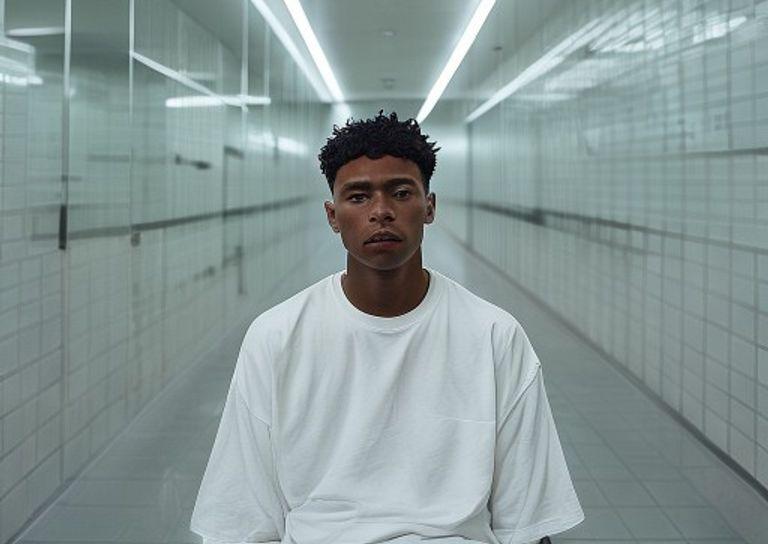
TikTok is a curated gallery of genetic outliers. The men you see rocking the most aggressive tapers usually possess a head shape that mimics a billiard ball. They have a symmetrical occipital bone. Their parietal ridge is perfectly balanced. When you apply a high-contrast taper fade to a head like that, it accentuates the geometry. It looks sharp. It looks intentional.
Most of us are not billiard balls. We have lumps. We have flat spots from sleeping weird as infants. We have protrusions that make no sense. A TikTok taper fade is a high-risk gamble because it strips away the camouflage. Long hair hides a flat crown. A medium fade buffers a protruding bump. A skin-tight taper fade puts your bone structure on full display. It is a spotlight on every imperfection of your skull.
Cranial Geometry is a Cruel Mistress
Consistency is the enemy of the viral trend. The TikTok taper fade relies on a very specific gradient. It starts at zero and climbs rapidly to a dense mass of hair on top. This creates a visual weight distribution that can either elevate your face or crush it.
If you have a long face, a high taper fade adds verticality. You end up looking like a human candle. If you have a round face, a taper that is too tight on the sides can make your head look like a lightbulb. The tragedy is that the haircut is technically perfect. The blend is smooth. The line is crisp. But the proportion is a disaster. You have a mathematically correct haircut that looks aesthetically wrong on your specific anatomy.
The Barber's Silent Consent
Your barber is in a tough spot. He sees the screenshot. He knows your head shape does not match the photo. But he also knows that Gen Z and Millennial men are terrified of being told no. He does not want to be the guy who kills the vibe. He tells you he can make it work. He clips. He fades. He blends.
He is performing a service, not an architectural consultation. He gives you exactly what you asked for. He provides the technical execution of the TikTok taper fade without questioning the structural viability. You both engage in a silent agreement to pretend it looks great until you leave the chair. The regret only sets in once the professional lighting of the shop is replaced by the cold reality of your bathroom mirror.
The High-Stakes Gamble of the Skin Fade
There is no undo button for a skin fade. Once the hair is gone, you are committed to the growth cycle. You spend the next three weeks wearing a hat to hide the fact that your head shape is sabotaging the look. You check the mirror every morning, hoping the silhouette has shifted. It hasn't.
This is the danger of trend-chasing. We prioritize the image over the individual. We treat our heads like blank canvases instead of complex biological structures. The TikTok taper fade is a beautiful style for the right person. For everyone else, it is a fast track to an awkward month of hiding under a baseball cap.
Stop Guessing with Your Hairline
Barbering is an art, but it is also a game of geometry. The only way to escape the trap is to see the result before the clippers touch your skin. You cannot rely on a static image of a stranger to predict how a fade will interact with your specific bumps and curves. You need a way to project the silhouette onto your actual head.
This is where the Haristyle app changes the math. Instead of handing your barber a photo of some influencer, you use AR to map the taper fade onto your own cranial structure. You see exactly where the weight falls. You see if the fade makes your head look too narrow or too round. You find the specific variation of the TikTok taper fade that complements your bone structure instead of fighting it. You walk into the shop with a visualization that is based on your reality, not an algorithm's fantasy.